
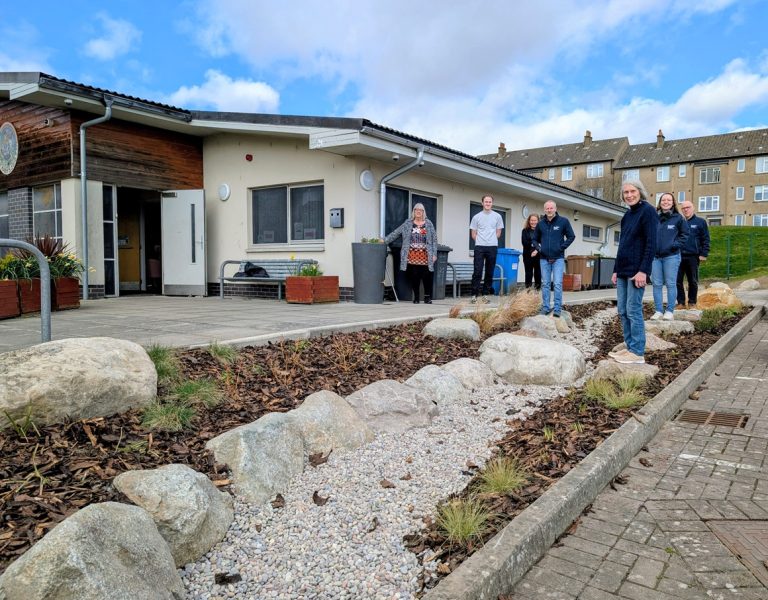
As extreme weather events become more frequent, cities worldwide are grappling with aging infrastructure and the rising threat of urban flooding. In Dundee, Scotland, a groundbreaking collaboration is proving that the most effective solutions are often the most natural ones. Through the Water Resilient Dundee partnership, local authorities, utilities, and community groups are transforming rainwater management, turning a simple community center into a shining beacon of sustainable urban drainage.
The Challenge: A City Built on Combined Sewers
Dundee faces a unique hydrological challenge. Approximately 88% of the city’s sewers are combined, meaning they carry both rainwater and sewage—the highest concentration in Scotland. During sudden, intense storms, like the severe weather events seen in recent years, these networks are easily overwhelmed, leading to localized flooding and pollution risks.
Even properties situated upstream, like the St Mary’s Community Centre in north Dundee, contribute to this downstream pressure. Every drop of rainwater running off the roof and into the traditional drainage network adds to the burden on wastewater treatment works, increasing energy use, operational costs, and flood risk.
The Solution: Engineering Meets Nature
To tackle this, the Water Resilient Dundee partnership—spearheaded by Scottish Water, Dundee City Council, and sustainable drainage specialist Sudsplanter Ltd—implemented a pilot project at St Mary’s Community Centre.
The centerpiece of this retrofit is the installation of two SuDSPlanter units. These are not your average flower pots; they are meticulously design-engineered rain gardens. By rerouting the community center’s roof downpipes, rainwater is intercepted and directed into these planters rather than the traditional sewer system.
The system works brilliantly:
- Interception & Storage: Water is temporarily stored in the planters during heavy downpours.
- Natural Filtration: A deep, layered soil mix filters the runoff, removing pollutants before the water is slowly released into the ground or an adjacent rain garden.
- Drought Resilience: The soil retains moisture, gradually releasing it to the plants during dry periods, creating a self-sustaining micro-ecosystem.
Adding a touch of interactive magic, the community center installed “cloud-trays” that visibly channel rainwater into the planters, making the invisible process of water management tangible and engaging, especially for children.
A Catalyst for Community and Biodiversity
This project is about much more than just moving water; it’s about building community trust and enhancing the local environment. Specially selected, native plant species have transformed a plain grassed area into a vibrant green space, already attracting bees and boosting local biodiversity.
Dominic McBennett, Catchment Planner at Scottish Water, highlighted the success of this holistic approach: “The Water Resilient Dundee strategy is part of our transition towards more holistic, sustainable, and adaptable water management. This represents a significant shift from reactive solutions to proactive, integrated systems that enhance the urban environment… They have also given us a massive biodiversity boost and helped us give something back to the community rather than just a grey pipe in the ground.”
Co-Designing the Future of Urban Resilience
A critical component of the St Mary’s project was community engagement. Commissioned by the partnership, Rebecca Wade, a senior lecturer in environmental science at Abertay University, facilitated workshops to ensure the space was co-designed with the people who use it every day.
“Collaborative, co-designed and co-funded SuDS projects, like this, are often the best,” Wade noted. “They are designed with community and stakeholder needs in mind and can add value to other agendas.”
To ensure long-term sustainability, Scottish Water will maintain the planters for the first three years before handing over stewardship to trained community center volunteers, fostering a true sense of local ownership.
Looking Ahead
The St Mary’s pilot has proven that small-scale, nature-based interventions can deliver outsized benefits: diverting stormwater, cutting energy use at treatment plants, boosting biodiversity, and educating the public.
Following this resounding success, the Water Resilient Dundee partnership is now exploring further SuDSPlanter installations across the city. Dundee is no longer just reacting to the rain; it is learning to dance with it, setting a powerful, green blueprint for urban climate resilience worldwide.